Copyright © All rights reserved.
Construction of the Marine Drive was started by the Cape Town
municipality in 1916. This was very different to the Marine Drive of
today……….flooding by the seas, sand, seaweed and flotsam were not unusual
hazards on the road.
Paarden Eiland was only actively promoted and proclaimed an industrial
area in 1935. Land was sold for 4 ½ pence per square foot. In 1968 it was
traded at R1.50.
The then new industrial suburb boasted one of the country’s first motor
assembly plants – Atkinson’s Motors – this is the building now housing Kondylis
Motors and other tenants in Paarden eiland road today. Dodge, Chrysler,
Plymouth, De Soto cars and commercials were built here. Water table flooding in parts of the factory was a problem when the nearby sea was ‘high’.
Construction of Marine drive
Paarden Eiland in the beginning
Paarden Eiland developed as a modern industrial area particularly after
the WW2. Epping and then Bellville opened up and attracted the larger expanding
enterprises from Paarden Eiland.
Smaller production units proliferated in Paarden Eiland; and then the warehousing,
distribution and servicing of finished goods became prevalent. Industry wane
and commercial activity replaced it. This process continues to the present day
with more and more mini-factories becoming a feature; now being developed under
sectional title ownership.
The modern industrial era
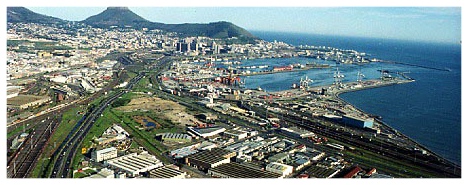
Paarden Eiland in foreground with Cape Town Harbour


But the evolution has not stopped. It continues with a growing retail
trade element that simply never existed here before.
From earlier car, steel engineering, textile manufacturing, cool drink
bottling, ice cream plant, foundries, bakery, hides/skins, wool stores we can
now buy at retail - new and used cars. 4x4’s, boats and rubber ducks, tiles,
furniture, meat, seafood, liquor, plumbing and bathroom fittings, car radios, alarm systems. Ceramic pots, car and truck hire, tv and home hi-fi equipment, along with attendant, professional service of banks, attorneys, doctors, estate agents. On top of this we now have restaurants, pubs, takeaways and nightclubs.
Paarden Eiland has served the economic needs of the population of the
western cape in various guises over the past 350 years. It has in fact gone
through five reincarnations – wild veld, agriculture, industry, commercial,
retail and now the sixth – entertainment. Even this modern perversion indicates the economic value of Paarden Eiland to the well being of the Cape.


Jan van Riebeek’s diaries make frequent
reference to hunting game in the wilderness around the mouths of the Salt,
Black and Diep Rivers; the area now known as Paarden Eiland. Hippopotamus in
the rivers was a hazard to watch out for !
When the northwest storms of winter raged the lee shore of Woodstock /
Paarden Eiland beach became the graveyard of (between 80 and 100) a sailing
ship; as a result of dragging anchors. Wolraad Woltemade is the enduring hero
of 1773 who rescued passengers from the wreck of the Jonge Thomas with his
horse before the intrepid two drowned from exhaustion. He was visiting the
beach to deliver food to his son who was guarding the goods washed ashore from
the foundered Jonge Thomas.

Wilderness to agriculture
From being a wilderness the area gave way to agriculture. Maps of 1786
show well-defined farms. Horses, cattle and sheep grazed with crops on the
higher ground towards modern Milnerton and rugby.
Beginnings of industry
Then came the beginnings of industry. Lime was produced from the blue
muscle shells washed up on the beach. The first lime kilns were often fuelled
with the timbers of ship wrecks on the beach – an early exercise in recycling !
Wheat milling, drying fish and salt production were all facilitated by the frequent
southeaster winds in the summer. Seawater ponds formed at the back of the beach
during winter storms. The sun and wind in the summer evaporated the water –
leaving salt deposits.
Leper patients, sewage & waste
The relative isolation of the Paarden Eiland area from the main residential
and commercial centres was put to good use by housing smallpox leper patients
here. Later it was also used as a sewage and waste/ refuse dump.
Jan van Riebeek days
Commercial to retail

Before Paarden Eiland